
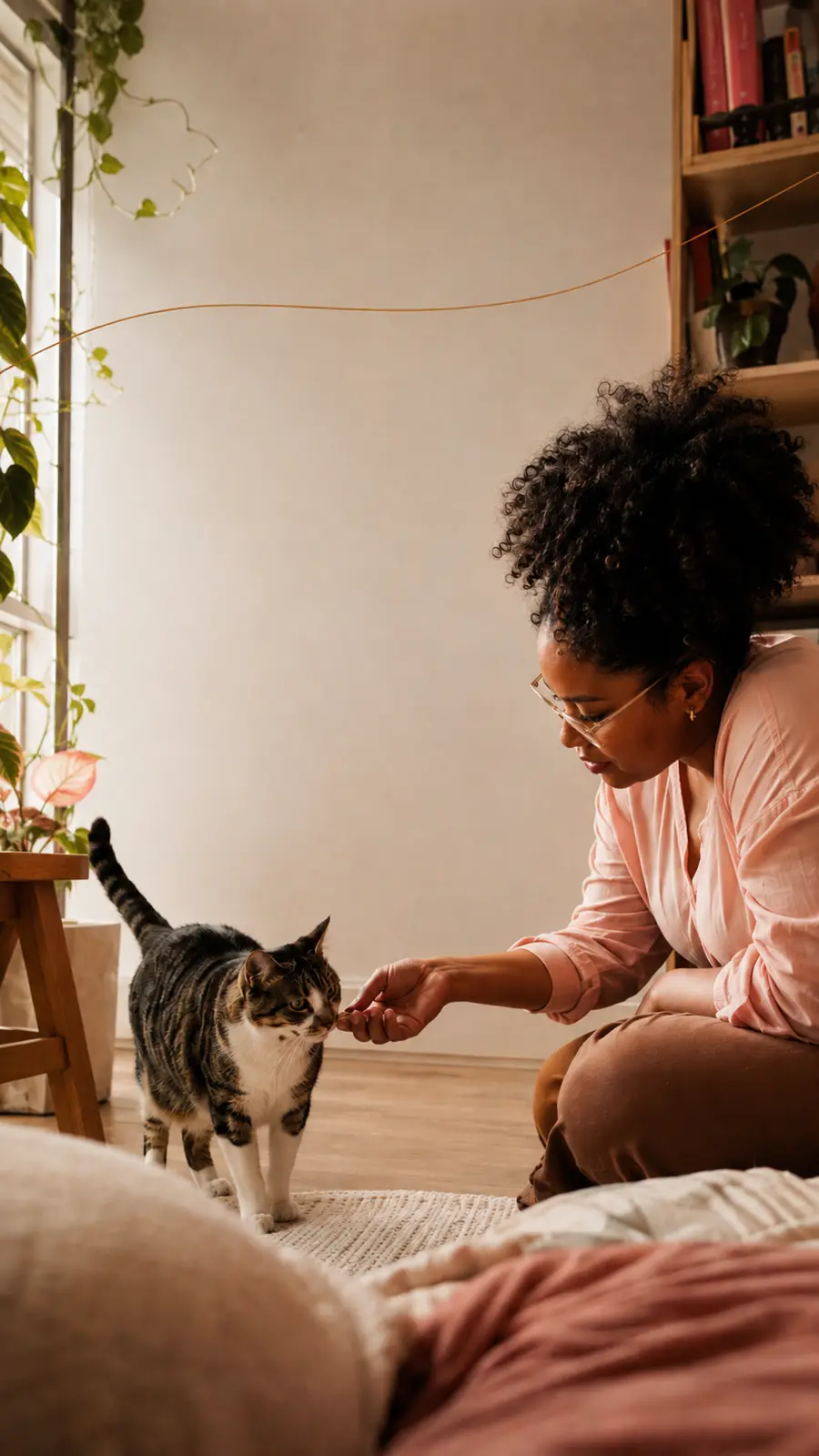
Ageing is a natural stage of life. It may change a cat’s pace, body, senses and care needs, but it is not a disease — and it does not look the same in every cat.
Some senior cats continue to play, climb and seek interaction for many years. Others begin to prefer slower movement, longer periods of rest or more accessible resources. Their needs cannot be understood from a date on the calendar alone.
What matters most is knowing an individual cat’s usual pattern and noticing what has changed for them. A subtle difference may reflect gradual adaptation. It may also be the first way a cat communicates pain, illness, sensory loss, cognitive difficulty or a mismatch between their abilities and their environment.
Ageing well does not mean overlooking change. It means noticing it and adjusting care before a quiet difficulty develops into suffering.
Is ageing the same for every cat?
No. Chronological age helps veterinary teams organise life stages, but it does not describe a cat’s physical, emotional or functional condition on its own.
The AAHA/AAFP life stage guidelines define senior cats as those over 10 years of age. Other organisations use slightly different ranges. These categories are useful clinical reference points, not predictions about what an individual cat will or will not be able to do.
Two cats of the same age may have very different needs. Comparing a senior cat with their own previous pattern is often more useful than comparing them with another cat.
- Genetics and health history
- Nutrition and body condition throughout life
- Chronic conditions, pain and mobility
- Oral health
- The physical and social environment
- Exposure to stress
- Access to preventive care
Body and body composition
Over time, some cats experience changes in muscle mass and fat distribution. Body weight alone does not tell the whole story: a cat may remain at a similar weight while losing muscle.
Veterinary assessment should therefore consider weight, body condition and muscle condition. Weight loss, reduced muscle over the spine or hips, difficulty maintaining muscle and changes in appetite deserve investigation, even when they develop gradually.
There is no universal rule that every older cat should simply eat less or change food at a particular birthday. Diet should be individualised according to health, test results, weight, muscle condition, hydration, preferences and any concurrent conditions.
Sleep and activity
Some cats begin to distribute their rest differently or choose warmer, easier-to-reach places. They may play for shorter periods while still showing interest and enjoyment.
Sleeping more, abandoning previously valued activities, hiding or remaining still for long periods may also be associated with pain, illness, fear or difficulty moving. Context, progression and accompanying signs help distinguish one situation from another.
Mobility
A cat may become more cautious when jumping or choose less demanding routes. However, no longer reaching surfaces, hesitating on stairs, misjudging jumps, pulling themselves up mainly with the front legs or avoiding the litter tray should not automatically be interpreted as ‘getting old’.
Cats are remarkably good at concealing pain. Mobility changes may be associated with degenerative joint disease and other conditions. Environmental adaptations can help, but they do not replace an assessment of the cause.
Vision, hearing, smell and taste
Sensory changes may occur with age. A cat may startle when approached unexpectedly, respond less to sounds, struggle in low light or show less interest in food.
These signs require assessment because eye conditions, high blood pressure, ear disease, dental problems, nausea and other conditions can also change how a cat perceives their environment and eats.
When sensory ability declines, predictability and accessibility become increasingly important. Approach gently, avoid sudden environmental changes, keep key resources in familiar locations and consider soft night lighting.
Skin, coat and self-care
Coat texture may change, and some cats need more support to remain comfortable and well groomed. A dull, matted, greasy or flaky coat, however, may indicate that bending and reaching certain areas has become painful or difficult.
Grooming support should be gentle, consent-based and adapted to the cat’s tolerance. A change in self-care is clinical information, not merely a cosmetic issue.
Behaviour and interaction
A senior cat may adjust how they interact. They may seek more closeness, prefer shorter contact or need longer periods of uninterrupted rest.
Persistent changes — including irritability, night-time vocalisation, disorientation, toileting outside the litter tray, withdrawal, unusual dependence or altered relationships — should not be dismissed as personality or age. Behaviour is communication and should be considered alongside physical health, sensory function, cognition and the environment.
Is losing ability always normal?
No. Growing older does not mean that pain, disorientation, weakness or loss of independence should be accepted without investigation.
There is an important difference between changing how an activity is performed and stopping because it has become difficult or painful.
The aim is not to expect a senior cat to behave like a young adult. It is to protect comfort, choice, participation and access to the activities that still matter to them.
How pain and disease can look like ‘just old age’
Many conditions common in older cats begin subtly. Chronic kidney disease, hyperthyroidism, high blood pressure, diabetes, dental disease, joint disease, gastrointestinal conditions, cancer and cognitive dysfunction may all change habits and behaviour.
No single sign confirms a diagnosis. Its duration, progression and relationship with other changes help the veterinary team decide which assessments are appropriate.
- Sleeping more, hiding or playing less
- Avoiding jumps and stairs
- Grooming less
- Losing weight or muscle
- Drinking or urinating more
- Struggling to enter the litter tray
- Vocalising more, particularly at night
- Becoming irritable or avoiding touch
- Appearing confused or changing familiar routes
- Changes in appetite or chewing
Why trends matter more than a single day
Cats have more active and quieter days. A single snapshot of the routine can be misleading. Tracking patterns over time makes small trends easier to recognise.
Short videos of the cat walking, jumping, eating or entering the litter tray can be very helpful during an appointment. Recording should not turn companionship into constant surveillance. Its purpose is to reveal what memory alone may miss.
AAHA/AAFP guidelines recommend veterinary examinations at least every six months for senior cats, with more frequent visits for cats with chronic conditions or individual needs.
- Appetite and water intake
- Weight, when it can be measured without stress
- Ease of walking, jumping and using stairs
- Entering and leaving the litter tray
- Sleep and resting places
- Grooming and coat condition
- Interest in play and the environment
- Interaction, vocalisation, confusion or withdrawal
Additional considerations
Adapt without removing choice
Ramps, steps, non-slip surfaces, low-entry litter trays and resources distributed throughout the home can reduce effort. A cat should still have choices of height, hiding, observation, rest and interaction that suit their abilities.
Preserve predictability
Major changes to the home, schedule or social environment may be more difficult for a cat with sensory or cognitive limitations. When change is necessary, make transitions gradually whenever possible.
Do not wait for a crisis to learn the new pattern
Preventive appointments, tests selected for the individual and early conversations about mobility, nutrition, pain and quality of life allow support to begin before difficulties accumulate.
Notice what is still going well
Interest in the window, pleasure in food, seeking contact, curiosity, comfortable rest and participation in daily life are all meaningful information about wellbeing.
Ageing is not disappearing. When we recognise a new rhythm without normalising suffering, we help a cat continue to participate in their own life with comfort, choice and dignity.
Debee's perspective
Ageing should not make a cat invisible within their own routine.
Age changes the way we care, but it never makes what the cat communicates less important.
Glossary of terms
- Ageing
- A natural and individual biological process that occurs over time. It is not synonymous with disease.
- Body condition
- An assessment of body fat using observation and touch.
- Muscle condition
- An assessment of muscle mass, particularly over the spine, shoulder blades, skull and hips.
- Degenerative joint disease
- Progressive changes within joints that may cause pain and reduced mobility. Signs in cats are often subtle.
- Cognitive dysfunction
- A syndrome involving changes in memory, learning, orientation, sleep and interaction; assessment must exclude other causes.
- Quality of life
- A multidimensional assessment of physical comfort, emotional needs, function, relationships and experiences that matter to the individual.
Sources and further reading
Educational content written by Debee Paulino, veterinarian and feline behaviour professional. It does not replace an individual veterinary assessment.
Back to the journal